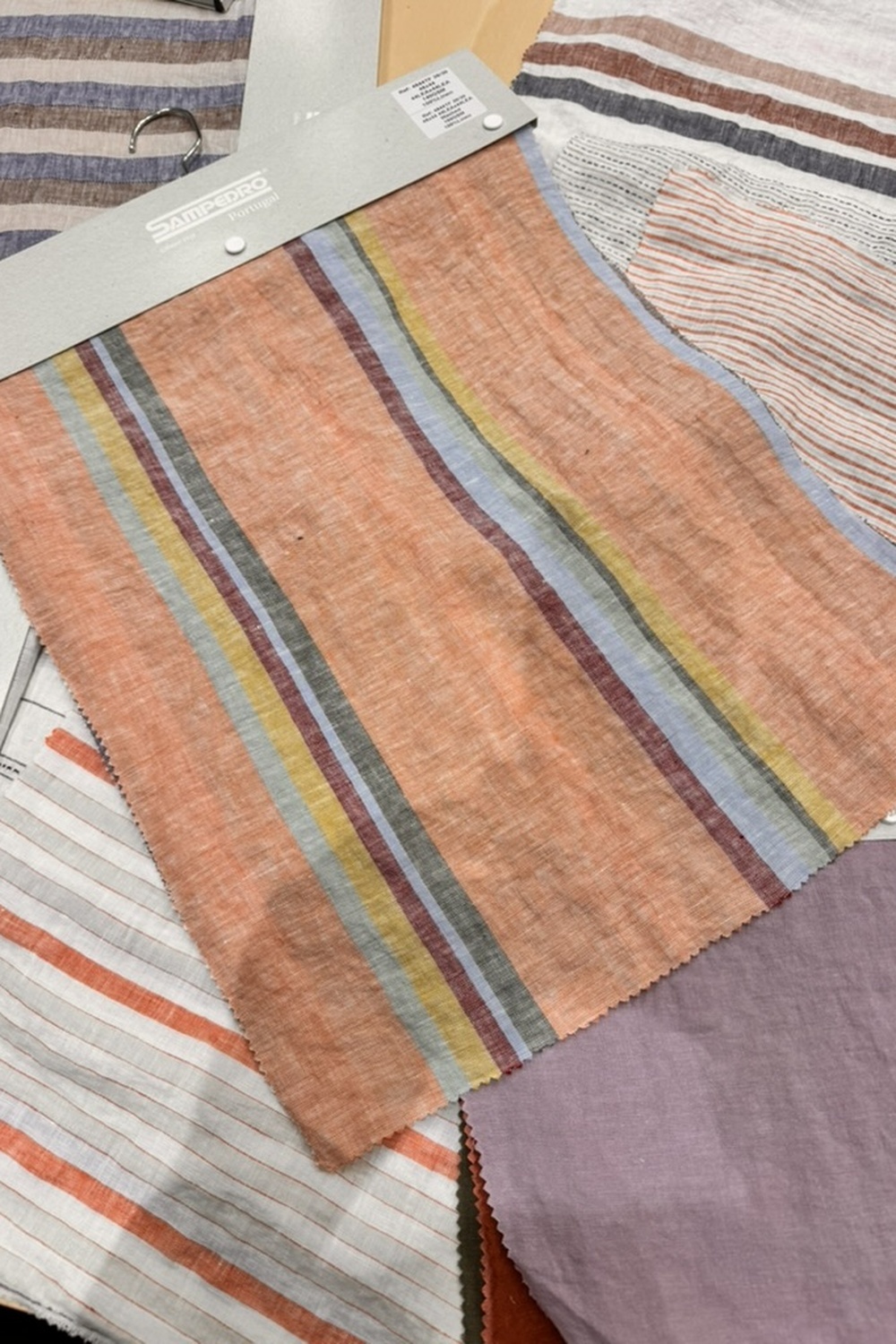
Should You Iron Linen Sheets? The Case For and Against
Posted by Avenelle Home on May 13th 2026

Linen's texture is, by nature, irregular. The long bast fibers of the flax plant don't lie flat the way cotton's shorter staple fibers do — and that structural character is precisely what gives linen its hand, its breathability, and its particular visual depth. So the question of whether to iron linen sheets is really a question about what you want linen to be in your home. There is no wrong answer, but there is a more informed one.
Why Linen Wrinkles — and Why That Isn't a Flaw
Flax fibers have low elasticity. Where cotton can stretch slightly and return to shape, linen holds the crease. This is a material property, not a quality defect. It's the same low elasticity that makes linen exceptionally durable — European flax linen generally grows stronger when wet and can outlast cotton sheeting by years, sometimes decades, with proper care.
The rumpled quality of a linen bed has become something of a design signifier in the last fifteen years, associated with European interiors, unhurried mornings, and a deliberate rejection of the hotel-tight aesthetic. There's a reason for that: linen's natural drape and creasing read as lived-in rather than neglected, provided the fabric itself is well-made.
In other words, wrinkles in linen communicate quality to most design-literate eyes. They say: this is real cloth, not a synthetic blend engineered to look untouched.
The Case for Ironing
That said, there are legitimate reasons to press linen sheets, and people have been doing it for centuries — long before the current cult of the casual bed.
- Surface sheen. Ironing compresses flax fibers, which produces a subtle luster. This is one of linen's oldest luxury associations. Pressed linen has a cool, almost polished hand against the skin that some sleepers genuinely prefer.
- Formal presentation. In a guest room, a tailored bedroom, or any space where the design intent is crisp and composed, ironed linen makes sense. Wrinkles are not the only way linen can look beautiful.
- Structured weaves. Fabrics with engineered patterns — woven designs rather than printed ones — can benefit from light pressing because it brings the motif into sharper relief. A woven windowpane, for instance, gains definition when the surface is smoothed. Our Mullion collection was designed to look compelling either way, but a warm iron does clarify its windowpane pattern against the Bone ground.
- Personal preference. Some people simply sleep better on a smooth surface. Comfort is not an argument anyone should have to defend.
The Case Against
The strongest argument against ironing linen sheets is practical: it takes time, and linen re-wrinkles almost immediately once slept on. You are ironing for the made bed, not for the experience of sleeping in it. If that visual payoff matters to you, the effort is worthwhile. If it doesn't, you are spending twenty to thirty minutes per set for something only you will notice before you pull back the covers.
There is also a care consideration. Ironing at too high a temperature — or ironing fully dry linen — can weaken fibers over time. If you do choose to press your sheets, iron while the fabric is still slightly damp, use a medium-high setting, and work on the reverse side to protect any surface finish. Never starch linen bedding. Starch stiffens the fiber and accelerates wear at fold points, which is the opposite of what good linen care should do.
A Middle Path: The Steam Option
A handheld garment steamer, used lightly over a made bed, relaxes the deepest creases without fully flattening the fabric. This is a reasonable compromise for anyone who wants a tidier look without committing to a full press. It takes roughly three minutes, preserves linen's natural texture, and avoids any risk of scorching. Many interior designers recommend this approach for styled bedrooms — enough intention to look considered, not so much that the linen loses its character.
What Actually Matters More Than Ironing
The single most impactful thing you can do for the appearance of your linen sheets has nothing to do with an iron. It is this: wash them correctly. Use a gentle cycle, cool to warm water, mild detergent without optical brighteners, and remove them from the dryer while still slightly damp. Smooth them onto the bed by hand. This alone eliminates the harshest creasing and lets the fabric settle into soft, even folds rather than hard-set wrinkles.
Linen is one of the few textiles that looks better with age — softer, more supple, more luminous — but only if it is cared for with some basic attentiveness. Whether you iron or not is an aesthetic choice. How you wash is a longevity choice. Put your energy where it compounds.
The Mullion — Avenelle Home
European linen. Woven in Portugal. Queen and King sets.
SHOP THE MULLION